Mathematics is often thought of as a modern science, filled with computers crunching numbers and concepts far beyond the human eye. Yet, it is one of the most ancient disciplines, born from the curiosity of civilizations thousands of years ago. In fact, some of the foundational principles in algebra, geometry, and number theory emerged centuries before modern arithmetic systems were developed. Behind these breakthroughs were visionary mathematicians whose theories and ideas laid the groundwork for how modern societies understand and interact with mathematics.
This article explores seven of the oldest and most influential mathematicians in world history. Some of their contributions are still taught in schools or form the backbone of current-day scientific advances. Their brilliance transcends time, demonstrating how early intellectual endeavors resonate far beyond their eras.
List of the Oldest Mathematicians
1. Thales of Miletus (c. 624 – c. 546 BCE)
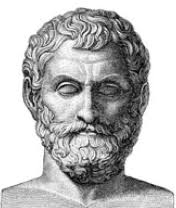
Thales of Miletus is hailed as one of the first mathematicians in recorded history. He lived in ancient Greece and is often regarded as the father of geometry. He was deeply interested in the principles of mathematical abstraction, as well as practical applications like measuring land boundaries and constructing infrastructure.
One of Thales’s standout contributions was his work in geometry, particularly his theorem dealing with circles. His famous proposition—that if two lines are drawn from the ends of the diameter of a circle to meet at a single point on the circle, they form a right angle—became a foundational element of geometry, known as Thales’s Theorem. This was significant because it marked a shift from empirical observation to logical reasoning, proving mathematical concepts systematically.
In addition to his mathematical achievements, Thales was also widely regarded as a philosopher and astronomer. As one of the Seven Sages of Greece, he blended mathematics with insights about the natural world. Thales’s early inquiries showed that mathematics was not only an abstract discipline but also a practical tool with applications in understanding the universe.
2. Pythagoras of Samos (c. 570 – c. 495 BCE)
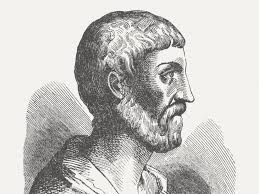
Pythagoras is one of the most famous names in ancient mathematics, largely due to his iconic theorem concerning right-angled triangles. Much more than a mathematician, Pythagoras founded an esoteric community dedicated to philosophy, mathematics, and mysticism. The followers of this school, known as the Pythagoreans, treated numbers almost as sacred objects.
The Pythagorean Theorem states that in a right-angled triangle, the square of the hypotenuse is equal to the sum of the squares of the other two sides. This principle underpins countless practical fields, from architecture to navigation. While the theorem existed in rudimentary forms before Pythagoras, he was the first to articulate and formalize it as a general concept applicable to all right triangles.
Beyond mathematics, Pythagoras believed in the relationship between numbers and the cosmos. He saw harmonies in music and the natural world as expressions of numerical ratios. His approach blurred the boundaries between scientific reasoning, spirituality, and aesthetics, creating a legacy that endured for centuries after his death.
3. Euclid (c. 300 BCE)
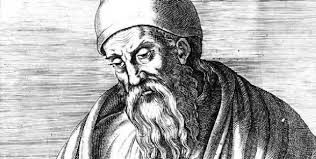
Often called the “Father of Geometry,” Euclid is perhaps one of the most influential figures in the history of mathematics. He lived in Alexandria, Egypt, and authored a pioneering work aptly titled The Elements, which synthesized various mathematical ideas of his time into a coherent system.
The Elements is one of the most influential textbooks in history. Within its concise 13 books, Euclid detailed definitions, postulates, proofs, and theorems that are still studied and taught to this day. Concepts like Euclidean geometry stem from this monumental text, demonstrating the enduring relevance of Euclid’s approach to understanding shapes, lines, and angles.
More than just a mathematician, Euclid was a methodologist. In The Elements, he introduced logical rigor and the systematic organization of concepts, creating a blueprint for mathematical scholarship. The text became a cornerstone not only of mathematics but of broader education in subjects requiring logical reasoning, serving as a template for intellectual inquiry for millennia.
4. Aryabhata (476 CE – 550 CE)

Aryabhata was an Indian mathematician and astronomer who made profound contributions to mathematics and science in the ancient world. His work influenced both Indian thought and global interpretations of mathematical systems, laying the foundation for fields as varied as algebra, trigonometry, and astronomical calculations.
One of Aryabhata’s most remarkable achievements was his system of representing numbers using a positional notation system—not unlike the modern decimal system. He was also one of the early proponents of irrational numbers. His calculations for the value of pi (π) were extraordinarily accurate for his era, showing his extraordinary grasp of numerical precision.
Aryabhata also contributed to astronomy. He devised methods for determining planetary orbits and even offered insights into the reasons behind solar and lunar eclipses. His bold fusion of mathematics with the physical sciences showcased the depth and breadth of his intellectual pursuits, making him a celebrated figure in the history of ancient Indian science.
5. Archimedes of Syracuse (c. 287 BCE – c. 212 BCE)
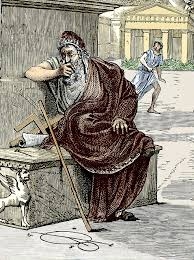
Archimedes of Syracuse is known for his innovative work in geometry and mechanics, distinguishing himself as one of the brightest minds in ancient mathematics. Whether solving abstract problems or inventing useful tools, Archimedes consistently blended genius with practicality.
Archimedes developed principles for calculating areas, volumes, and surfaces of various geometric shapes. His work with levers and pulleys demonstrated the importance of mathematical principles in engineering. Archimedes famously remarked, “Give me a place to stand, and I will move the earth,” showcasing his belief in the power of physics and mathematical reasoning.
Some of Archimedes’s theoretical discoveries were almost prophetic. His principle regarding the buoyancy of objects submerged in fluid, known as Archimedes’ Principle, remains fundamental in physics and engineering. Archimedes successfully demonstrated how theoretical mathematics could have tangible, real-world implications, securing a legacy unlike any other.
6. Hypatia of Alexandria (c. 360 CE – 415 CE)
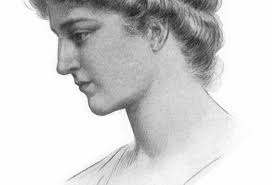
Hypatia was one of the first known female mathematicians, and her contributions during the late Roman Empire remain iconic. Born in Alexandria, Egypt, she became a beacon of intellectual wisdom during a turbulent period marked by the decline of classical learning.
Hypatia focused on algebra and geometry, improving and expanding upon the work established by earlier mathematicians. She wrote commentaries on several notable works, including those of Euclid and Ptolemy, demonstrating her ability to synthesize complex ideas and expand upon them with innovative reasoning.
Despite her immense intellect, Hypatia’s life was tragically cut short during political and religious upheaval in Alexandria. Yet, she is remembered as a symbol of academic resilience. Hypatia’s contributions helped preserve mathematical ideas during times of uncertainty, ensuring their survival for future generations.
7. Al-Khwarizmi (c. 780 – c. 850 CE)
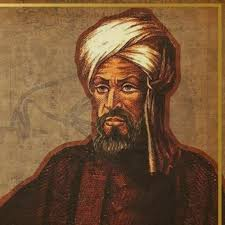
Known as the father of algebra, Al-Khwarizmi was a Persian mathematician who revolutionized mathematics during the Islamic Golden Age. His innovative contributions to arithmetic and algebra earned him lasting recognition and influence.
Al-Khwarizmi authored the groundbreaking text Al-Kitab al-Mukhtasar fi Hisab al-Jabr wal-Muqabala (The Compendious Book on Calculation by Completion and Balancing), which introduced systematic ways to solve quadratic equations. The term “algebra” itself derives from the Arabic word “al-jabr” used prominently in Al-Khwarizmi’s treatise. His algorithms for solving practical problems contributed to wide-reaching advancements in computation.
Moreover, Al-Khwarizmi played a pivotal role in introducing Hindu-Arabic numerals to the Western world. His work bridged cultural and intellectual gaps, helping create a unified mathematical understanding across continents. Al-Khwarizmi’s legacy remains etched not only in mathematics but in the way we perceive and communicate numerics today.
Conclusion
These seven mathematicians were pioneers who dared to venture into uncharted intellectual territories. From ancient Greece to the Islamic Golden Age, their discoveries and systems laid the foundation for modern mathematics, revealing truths that continue to shape science, engineering, and daily life. They were more than mathematicians; they were visionaries who saw mathematics as a universal language capable of unlocking nature’s mysteries.
Today, their contributions serve as reminders of human ingenuity and curiosity, enriching our understanding of history and inspiring new generations to explore the limitless realm of numbers and logic. The genius of these individuals transcends their time, allowing us to appreciate not only their brilliance but also the very origins of mathematical thought itself.