Author: Oldest List Team

  • Oldest Gas Stations Around the World

    The concept of the gas station, as we know it today, evolved in tandem with the rise of the automobile industry. These refueling hubs have been servicing customers for over a century, and some of the oldest gas stations in the world have stories steeped in historical significance. They not only provided gasoline to keep the vehicles running but also became cultural landmarks representing the automobile revolution.

    This article sheds light on the oldest gas stations around the globe, delving into their unique histories and the roles they played in their respective communities.

    Oldest Gas Stations in the World

    1. First Filling Station

    The Standard Oil station in Seattle, Washington opened in 1907 and is considered by many to be the world’s first purpose-built gas station. Before this, gasoline was primarily purchased at general stores and pharmacies—often in hazardous glass containers.

    The station featured a rudimentary setup with a hose from a storage tank, changing how motorists refueled their cars forever. Although the original building no longer exists, its legacy as the pioneer of modern gas stations is indisputable.

    2. Stadt-Apotheke

    While not a gas station in the traditional sense, Stadt-Apotheke in Wiesloch, Germany, holds the unique distinction of being the location where Bertha Benz refilled her automobile with Ligroin during the first long-distance journey in automotive history. This event, which took place in 1888, inadvertently positioned the pharmacy as the first filling station in the world. To this day, Stadt-Apotheke is celebrated and marked with a memorial at its site to commemorate its unexpected yet pivotal role in automotive history.

    3. Reighard’s, Altoona, Pennsylvania (1909)

    Reighard’s in Altoona claims to be the oldest gas station in continuous operation in the United States. Starting as a blacksmith shop in 1888, it began selling gasoline in 1909. Remarkably, Reighard’s has been servicing cars for over a century, maintaining its charm and nostalgic aura. The station has seen vast changes in the automobile industry but remains a fully operational blast from the past, offering a window into motoring history for its patrons.

    4. R. W. Lindholm Service Station

    Although not among the earliest gas stations, R. W. Lindholm Service Station deserves a mention for its architectural significance. Designed by Frank Lloyd Wright in 1956 and completed in 1958, it is the only gas station by the renowned architect. Its design reflected Wright’s vision for the future of the automobile culture, with an upper-level observation deck. Today, this building is preserved for its historic value, showcasing a fusion of mid-century modern architecture and the utilitarian demands of a service station.

    5. Bob’s Gasoline Alley, Cuba, Missouri (1930s)

    Bob’s Gasoline Alley in Cuba, Missouri, is a fascinating repository of gas station and automobile memorabilia. Starting from the 1930s, it offers an eclectic mix of vintage gas pumps, signs, and oil cans. While it is not operational as a service station, it serves as a museum and a visual history lesson for anyone interested in the evolution of gas stations. The colorful collection is a testament to the glory days of the American road trip culture.

    6. Skelly Gas Station, El Dorado, Kansas (1928)

    Situated in El Dorado, Kansas, this Skelly Gas Station represents a significant period in America’s booming oil industry of the late 1920s. Serving motorists for many years before being converted to a visitor’s center and museum, it reflects the architectural trends of small-town service stations of the era. Its restoration to its former glory provides insight into the service station’s role in a period of growing American mobility. This gas station serves now as a nostalgic reminder of the rich oil history of Kansas.

    7. Gilmore Gas Station, Los Angeles, California (1935)

    The iconic Gilmore Gas Station in Los Angeles, California, is a visually striking example of the Streamline Moderne architectural style prevalent in the 1930s. It is part of the historic Farmers Market and served as a busy refueling spot before it ceased operations. Its red and white color scheme and art deco features make it a photogenic landmark, now used for various events and film shoots. The station, although not functioning in the traditional sense, remains a cherished piece of L.A.’s auto heritage.

    8. Jack Colker’s 76 Station

    Another architecturally significant station is Jack Colker’s 76 Station in Beverly Hills, which features a dramatic, parabolic roof designed by architect Gin Wong. When first constructed, its futuristic design symbolized the optimism of the Space Age. Positioned on Crescent Drive, this gas station continues to serve customers while being admired for its architectural flair, ensuring its preservation as both a functional entity and a design icon.

    9. Beacon Hill Shell Station

    One of Seattle’s most unusual historical sites is the Beacon Hill Shell Station. Built in the 1930s, its design mimics a small-scale classical temple, inspired by the 1932 Los Angeles Olympics. It was meant to be a draw for driving customers, showcasing extravagant and whimsical architecture to make gas stations stand out. Although it’s no longer operational as a service station, it is a cherished historical landmark and a prime example of creative automotive architecture from the era.

    10. Potter’s Service Station

    Potter’s Service Station in Bowling Green has seen a lot of history since its inception in 1921. It represents a typical rural American gas station from the early 20th century and thrived through the golden age of automobile travel. Though no longer in operation, the service station remains a significant piece of local history, embodying the charming small-town spirit and the advent of car culture in rural Virginia. The community values Potter’s as an irreplaceable relic from bygone days.

    FAQs

    What factors have led to the longevity of these old gas stations?

    The longevity of these gas stations can often be attributed to their historical significance, unique architecture, community value, and adaptability. Some have been preserved because they are landmarks of cultural heritage or architectural design.

    In some cases, continued operation in the same industry has helped preserve them, while others have adapted to new uses that ensure their maintenance and protection.

    How have the oldest gas stations adapted to modern fuel types and technology?

    Some of the oldest gas stations that remain operational have updated their facilities to accommodate modern fuel types, including unleaded gasoline and diesel. They have also integrated technology such as digital payment systems and efficient fuel pumps. However, their exterior appearances often retain historical features, balancing nostalgia with modern functionality.

    Do any of these historical gas stations still operate in their original capacity today?

    A few of these historical gas stations, such as Reighard’s in Pennsylvania and Jack Colker’s 76 Station in California, continue to operate as functional service stations, providing fuel and services to customers. They have preserved their original roles by adapting to current needs and maintaining a balance between traditional charm and modern amenities.

    Are there preservation efforts for these historical gas stations?

    Yes, preservation efforts are in place for many of these historical gas stations, especially those with architectural and cultural significance. These initiatives may include listing on historical registers, restoration projects, and conversion into museums or cultural sites. Preserving these landmarks often involves collaboration between private owners, historical societies, and government agencies.

    Conclusion

    The world’s oldest gas stations are more than just relics of the past; they are windows to the very beginning of car culture and significant contributors to local history and global industrial advancements. While some continue to pump gas just as they did a century ago, others have been repurposed, standing as monuments to the whimsical and innovative spirits that have driven the automobile industry forward.

    These ten stations, sprinkled around the globe, offer us a chance to reflect on how far we have come in terms of technology, design, and cultural heritage, while also reminding us of the common thread of innovation that links each era to the next. As society moves towards electric vehicles and alternative fuels, the story of these pioneering establishments will maintain their potency as markers of human progress and nostalgia for the road travelers of yesteryear.
  • Oldest Playwrights in the World

    The art of playwriting has been an integral part of human culture, immortalizing not just the playwrights but also the era, beliefs, and societal structures of their time. The narrative of history is partly written on the stages of the world, through the dialogues and dramatic structures concocted by the minds of those daring enough to put pen to paper.

    In this exploration, we journey through the epochs to unveil the oldest playwrights known to humanity, whose works have transcended time, providing us with invaluable insights into ancient civilizations and still influencing the theatre of today. Their legacies, rooted in the ancient clay tablets, papyrus, and manuscripts, continue to echo through millennia.

    Oldest Playwrights in the World

    1. Aeschylus

    Aeschylus, the father of Greek tragedy, virtually reinvented drama in the 5th century B.C.E. He added a second actor to the stage, transforming narrative monologue into dramatic dialogue, thus giving birth to true drama. His trilogy, “The Oresteia,” is among the magnificent pillars of classical literature, dissecting themes of justice, power, and familial curse.

    Aeschylus’ contribution to playwriting isn’t merely literary; he expanded the theatrical performance itself, enhancing costume designs and scenic effects. His innovations laid the foundation for Western drama, influencing subsequent generations deeply.

    2. Sophocles

    Sophocles, a contemporary of Aeschylus, further refined Greek drama by introducing a third actor, expanding the potential for complex storytelling and character development. His most renowned work, “Oedipus Rex,” remains a cornerstone of dramatic literature, exploring themes of fate, free will, and the human condition.

    Sophocles’ writing style was noted for its grace and beauty, often focusing on the tragic flaws and moral integrity of his characters. With over 120 plays to his name, though only a fraction survives, his impact on the narrative structure and the cathartic potential of tragedy is unparalleled. His works are still widely studied and performed, testament to their lasting significance.

    3. Euripides

    Euripides, another giant of ancient Greek drama, introduced a psychological depth to his characters that was unprecedented at the time. His plays, such as “Medea” and “The Bacchae,” delve into the inner workings of the human psyche, exploring themes of revenge, passion, and the dualities of man. Euripides was known for questioning traditional societal norms and the whims of the gods, often portraying them as capricious or malevolent.

    His innovative use of choruses and deus ex machina, as well as his development of strong female protagonists, broke new ground. Despite being less celebrated in his own time, Euripides’ influence on drama and philosophy is profound and enduring.

    4. Aristophanes

    Turning from tragedy to comedy, Aristophanes is celebrated as ancient Greece’s greatest comic playwright. His satirical plays, such as “Lysistrata” and “The Clouds,” critique the social, political, and philosophical life of Athens. Aristophanes’ wit and sharp commentary on contemporary Athenian society not only entertained but also provoked thought regarding the moral and societal issues of his day.

    Unlike his predecessors, his plays teem with playful mockery, fantastical plots, and crude humor, offering a stark contrast to the solemnity of tragic drama. His works preserve an invaluable comedic perspective on ancient Greek life, politics, and culture.

    5. Plautus

    Titus Maccius Plautus, a playwright of ancient Rome, brought Greek New Comedy to Roman audiences through adaptations that celebrated the Roman spirit. His comedies, including “Amphitryon” and “Miles Gloriosus,” are characterized by intricate plots, mistaken identities, and the humorous dynamics between slaves and their masters.

    Plautus’ legacy lies in his masterful blend of comedic timing, witty dialogue, and societal satire. His influence is evident in the works of later playwrights and his fingerprints can be seen on the structure of modern comedic drama. Despite the passage of centuries, Plautus’ works remain a testament to the universal appeal of humor.

    6. Sophron

    Sophron, a playwright and poet from Syracuse, is known for his written mimes—short, dramatic sketches of daily life written in the Sicilian dialect. Although none of his works survive in full, they are significantly cited by Plato and were admired for their vivid portrayal of everyday activities, character, and speech. Sophron’s mimes were groundbreaking in that they depicted scenes from the life of ordinary people, a departure from the gods, heroes, and figures of myth that dominated Greek tragedy. His influence on later literature, notably on the Roman comic playwrights and even on the psychology of characters in European drama, is noteworthy. Through fragments and historical accounts, his legacy offers a glimpse into the evolution of theatrical realism.

    7. Menander

    Menander was a towering figure of the New Comedy period in Greece, known for his sophisticated plays that explored social issues and character driven plots with a comedic lens. Though much of his work was lost until recent times, discoveries like “The Grouch” reveal a playwright who excelled in portraying the complexities of human relationships, using a more subdued and realistic style of comedy compared to Aristophanes.

    Menander’s influence extended far into Roman times, and his techniques can be traced through the comedies of Plautus and Terence and beyond, impacting the development of Western literature’s comedic genre. His keen observation on the foibles of society and the human condition resonates with audiences even today. Menander’s legacy lives on as his rediscovered texts continue to be studied and admired for their literary quality and insight into human nature.

    8. Terence

    Publius Terentius Afer, known as Terence, was an African playwright of the Roman Republic whose comedies developed the sophisticated portrayals of characters and situations introduced by Menander. Famous for sayings like “Homo sum, humani nihil a me alienum puto” (I am a human being, I consider nothing that is human alien to me), his plays, such as “The Mother-in-Law” and “The Eunuch,” showcased his skill in crafting engaging tales that reflected the complexities of human relationships.

    Terence’s work was celebrated for its elegant language, psychological depth, and the absence of stereotypical characters found in earlier forms of comedy.

    Despite facing criticism in his time for his African heritage and alleged borrowing from Greek texts, Terence’s influence on Renaissance literature and drama was profound, shaping the development of European theatrical tradition. His plays, which were a critical bridge between Greek new comedy and Roman literary culture, still speak to modern audiences with their timeless themes.

    9. Hrotsvitha of Gandersheim

    Hrotsvitha, a 10th-century German canoness, is considered the first known female playwright of the post-classical era. Her six plays, written in Latin, were inspired by the Roman comedies of Terence, although they carried Christian themes and morality tales intended to edify rather than merely entertain.

    She is heralded for introducing strong female characters who were virtuous, intelligent, and often outwitted men, challenging the typical gender norms of her time.

    Hrotsvitha’s works remained mostly forgotten until the Renaissance, when they were rediscovered, highlighting her role not only as a pioneering female voice in a male-dominated field but also as a connector between classical drama and medieval literature. Her courage and creativity laid the groundwork for future generations of female writers and playwrights.

    10. Kalidasa

    Kalidasa stands among the greatest literary figures of ancient India, with his work dating possibly between the 4th and 5th centuries CE. He brought Sanskrit drama to its zenith, blending lyrical beauty with profound philosophical insights. His play “Shakuntala” is a masterpiece that has been admired around the world for its intricate portrayal of love, fate, and redemption.

    Kalidasa’s works are celebrated for their poetic elegance, rich metaphors, and deep understanding of the human heart, as well as the natural world. As a playwright, his influence stretches beyond the confines of national and cultural boundaries, embodying the universal aspects of human experience.

    FAQs

    What is Tragedy in Greek Drama?

    Tragedy in Greek drama refers to a form of theatre originating in ancient Greece that explores human suffering through the interactions of characters in conflict with themselves, others, or the divine. It often culminates in a cathartic resolution, allowing audiences to experience relief through the protagonists’ experiences of pity and fear.

    How Did Comedy Differ From Tragedy in Ancient Greece?

    Comedy in ancient Greece was fundamentally different from tragedy in tone, purpose, and characters. While tragedy dealt with the high-born and the divine alongside serious themes and noble acts, comedy often focused on the common people, satirical content, and absurd or risqué situations to provoke laughter and entertain.

    Who Invented Drama?

    The origins of drama can be traced back to ancient Greece, with Thespis often honored as the inventor of drama in the 6th century BCE. He was the first to introduce a single actor performing alongside the chorus, a significant innovation that allowed dialogue and narrative complexity.

    Why is Shakespeare Not on This List?

    While William Shakespeare is unquestionably one of the most influential playwrights in history, this list focuses on the oldest known playwrights whose work laid the foundational structures of drama and theater. Shakespeare, operating in the late 16th and early 17th century, was benefited from these much earlier developments in playwriting.

    What Significance Do These Ancient Playwrights Hold Today?

    These ancient playwrights hold immense significance today as their works are not only performed and read, but they also continue to influence modern storytelling, drama, and cinema. Their exploration of human nature, society, and the divine provides timeless insights and continues to inspire contemporary writers and directors.

    Conclusion

    The legacy of the world’s oldest playwrights is a testament to the enduring power of storytelling and its ability to explore the depths of human emotion, societal constructs, and universal themes. From the tragic to the comedic, these playwrights mastered the art of drawing audiences into compelling narratives that reflect the complexities of the human experience. Their contributions laid the foundational stones for future generations, shaping the trajectory of literature and drama. As we reflect on their innovations and narratives, we gain not only a window into ancient civilizations but also timeless lessons that continue to resonate in today’s global culture. The echoes of their ancient voices remind us that at the heart of every story lies the enduring spirit of humanity, with its trials, tribulations, joys, and triumphs.

  • Top 10 Oldest Architects Worldwide

    The history of architecture is a fascinating tapestry that weaves through time, touching every corner of the globe. It’s a narrative filled with innovation, astounding creativity, and, at its very core, the oldest architects whose visions have stood the test of time. These pioneers laid the foundational stones of what architecture is today. Their work transcends mere buildings; it’s about creating spaces that reflect humanity’s aspirations, fears, and beauty.

    In this exploration, we’ll journey through the annals of architectural history to uncover the ten oldest architects whose legacies continue to inspire and awe.

    Oldest Architects in the World

    1. Imhotep

    Regarded as the first architect in history, Imhotep’s influence is profound and enduring. Born in the 27th century BCE in Ancient Egypt, he was not only an architect but also a polymath – a physician, engineer, and an important figure in Egyptian history. His most notable contribution was the design of the Djoser’s Step Pyramid at Saqqara, a revolutionary design that predates the more famous Pyramids of Giza. This structure marked a significant departure from the traditional mastaba tombs used previously and paved the way for future architectural innovations.

    Imhotep’s work is celebrated for its ingenuity and has earned him a god-like status in Egyptian culture.

    2. Senenmut

    Senenmut, active in the 18th Dynasty of Egypt, is another architect whose work has transcended millennia. He is best known for designing and constructing the mortuary temple of Hatshepsut, located at Deir el-Bahri. This architectural marvel is considered one of the incomparable monuments of ancient Egypt.

    Senenmut’s design cleverly integrated the rugged landscape into the structure, creating a harmonious relationship between nature and architecture. His innovative use of space and light in the temple has been studied and admired by architects for centuries.

    3. Vitruvius

    Moving forward in time, Vitruvius, a Roman architect and engineer from the 1st century BCE, significantly impacted architectural theory. His treatise, “De Architectura,” is the only work of its kind that has survived from antiquity, offering invaluable insights into Roman building practices and philosophies. Vitruvius emphasized the importance of symmetry, proportion, and order in buildings, principles that have influenced Western architecture for centuries.

    His concepts of firmitas, utilitas, and venustas (durability, utility, and beauty) remain foundational in architectural education. Vitruvius’s work truly bridges the gap between the ancient and modern worlds of architecture.

    4. Hisham ibn Abd al-Malik

    Hisham ibn Abd al-Malik, the 10th Umayyad caliph, reigning from 724 to 743 AD, is often overlooked in discussions about architects. However, under his rule, Islamic architecture flourished, marking the era with magnificent constructions. The most notable among these is the Mshatta Facade, which now resides in the Pergamon Museum, Berlin. This piece is a testament to the intricate art and architecture of the Umayyad period. Hisham’s contributions to architecture go beyond buildings; he helped cultivate an Islamic aesthetic that defined an era.

    5. Yazdegerd III

    As the last king of the Sassanian Empire, reigning from 632 to 651 CE, Yazdegerd III’s era is noted not just for its historical significance but also for architectural accomplishments. Although not an architect himself, the architectural projects commissioned during his reign, such as the Taq Kasra (arch of Ctesiphon), represent the apex of Sassanian architectural engineering. This magnificent arch is the largest single-span vault of unreinforced brickwork in the world. Its creation showcases the innovative engineering and architectural skills of the Sassanian architects, reflecting the empire’s grandeur and sophistication.

    6. Kallikrates and Iktinos

    The Parthenon in Athens, a symbol of ancient Greece, was designed by architects Kallikrates and Iktinos in the 5th century BCE. Their work on this temple dedicated to Athena, the patron goddess of Athens, is celebrated for embodying the ideals of classical Greek architecture.

    The precision and mathematical harmony in the Parthenon’s design are admired as a pinnacle of human achievement in architecture. These architects’ understanding of optical refinements and proportion created a structure that seems to defy its monumental scale, becoming almost ethereal in its beauty. Their legacy is a timeless contribution to the architectural world, influencing countless generations.

    7. Apollodorus of Damascus

    An engineer and architect from Damascus, Apollodorus was the favorite architect of Emperor Trajan. In the 2nd century CE, he designed several important structures in Rome, including the Trajan’s Market and Trajan’s Column. His work is characterized by bold innovations in structure and form, utilizing concrete and brick extensively.

    Apollodorus’s designs exemplify the Roman architectural revolution that would come to influence the entire Western world. His mastery over engineering and architectural principles was so profound that his works are studied and revered to this day.

    8. Anthemius of Tralles and Isidorus of Miletus

    As the architects of the Hagia Sophia in Istanbul, Anthemius of Tralles and Isidorus of Miletus created one of the most significant buildings in the world. Completed in 537 CE under the reign of Emperor Justinian I, Hagia Sophia was the world’s largest cathedral for nearly a thousand years. Its innovative dome, supported by pendentives, demonstrates a brilliant engineering solution that changed the course of architecture.

    The building’s design harmoniously blends centralized and basilical structures, creating a monumental space that has inspired awe throughout the ages. Their work on Hagia Sophia represents a pinnacle of Byzantine architecture.

    9. Filippo Brunelleschi

    Moving into the Renaissance, Filippo Brunelleschi is often hailed as a founding figure of modern architecture. In the early 15th century, he designed the dome of the Florence Cathedral, an engineering marvel that remains the largest brick dome ever constructed. Brunelleschi overcame significant technical challenges to erect the dome, inventing new machinery and techniques for its construction. His understanding of mathematical perspective and architectural principles heralded a new era in architecture, making him a pivotal figure in the transition from medieval to modern architectural design. Brunelleschi’s dome is not just a triumph of engineering; it symbolizes the human spirit’s limitless potential.

    10. Sinan

    Regarded as the greatest architect of the Ottoman era, Sinan’s career spanned six decades, during which he designed over 300 major structures. Born in 1489, Sinan’s most famous works include the Selimiye Mosque in Edirne and the Suleymaniye Mosque in Istanbul. His genius lay in his ability to blend Islamic architecture with Byzantine and Persian influences, creating a distinct style that was both innovative and respectful of the past.

    Sinan’s masterful use of space, light, and dome engineering marked a zenith in Ottoman architecture. His contributions have left an indelible mark on the architectural landscape, making him one of the most influential architects in history.

    FAQs

    What is the significance of Vitruvius in modern architecture?

    Vitruvius’s treatise, “De Architectura,” laid down the principles of symmetry, proportion, and order, which continue to underpin much of modern architectural theory. His ideas on durability, utility, and beauty are foundational concepts that guide contemporary architectural design.

    How did Islamic architecture influence the modern world?

    Islamic architecture introduced a variety of innovations, including intricate geometric patterns, muqarnas (ornamental vaulting), and the extensive use of calligraphy. These elements have influenced various modern architectural styles, promoting a blend of functionality and decorative artistry.

    Why is the Hagia Sophia considered an architectural marvel?

    The Hagia Sophia is celebrated for its massive dome, which was an engineering breakthrough at its time. The innovative use of pendentives to support the dome allowed for a spacious and uninterrupted interior space, setting a new standard for religious architecture.

    How did Brunelleschi construct the dome of Florence Cathedral?

    Brunelleschi used a herringbone pattern for the brickwork and constructed a unique supporting frame to distribute the weight of the dome as it was being built. His techniques allowed the dome to be constructed without the need for traditional wooden centring.

    What legacy did Sinan leave in architectural history?

    Sinan’s legacy is embodied in his masterful integration of diverse architectural elements and his ability to create spatial harmony. His works, characterized by balanced proportions and innovative use of domes and light, have influenced not just Ottoman architecture but the entire field of architectural design.

    Conclusion

    The annals of architectural history are marked by the extraordinary achievements of its earliest pioneers. From the ancient pyramids of Egypt to the innovative domes of the Renaissance and the intricate designs of Islamic architecture, these oldest architects laid the foundations upon which modern architecture stands. Their legacy is not just in the structures that continue to awe and inspire but in the enduring principles of design, innovation, and beauty that drive the field of architecture forward. As we continue to build and imagine the spaces of the future, it is upon their giant shoulders that we stand.

  • 9 Oldest Cars in the World

    From the clattering steam carriages of the 19th century to the sleek motor vehicles of today, the automobile industry has experienced a dynamic evolution. This advancement in automotive technology has been a long and fascinating journey, which began with several inventive individuals who crafted the oldest cars in the world. These pioneers laid down the foundation of modern transportation, and their creations are now treasured as landmarks in the history of human mobility.

    In this article, we celebrate the ingenuity of the earliest automobiles, by exploring nine of the oldest cars that have been critical in steering the course of automotive history.

    Oldest Cars in the World

    1. 1884 De Dion-Bouton et Trepardoux Dos-a-Dos Steam Runabout

    The 1884 De Dion-Bouton et Trepardoux Dos-a-Dos Steam Runabout, fondly referred to as ‘La Marquise,’ is considered by many to be the oldest running car in the world. It was built by George Bouton and Charles-Armand Trepardoux for French entrepreneur Count de Dion, one of the most prominent figures in early automotive history. This steam-powered car was ahead of its time and could reach speeds up to 38 miles per hour.

    La Marquise has been through several ownerships and even won the first-ever car race in 1887. Remarkably, it still maintains operational status and was sold at an auction in 2011, commanding a price that reflected its iconic stature.

    • Steam-powered vehicle
    • Seats four people
    • Auctioned for over $4.6 million

    2. 1885 Benz Patent-Motorwagen

    The 1885 Benz Patent-Motorwagen is revered as the first true automobile powered by an internal combustion engine. Conceived by German inventor Karl Benz, this three-wheeled vehicle heralded the beginning of gasoline-fueled transportation. The Patent-Motorwagen’s single-cylinder, four-stroke engine represented a revolutionary step that paved the way for contemporary vehicle designs.

    Despite its modest power output, the Motorwagen remains a significant milestone in automotive history. It symbolizes the transition from horse-drawn carriages to motorized transport, making Karl Benz a legendary name in the automotive industry.

    • First automobile with an internal combustion engine
    • Three-wheeled design
    • Output of less than 1 horsepower

    3. 1886 Daimler Motorized Carriage

    Another significant automobile belonging to the dawn of motorized travel is the 1886 Daimler Motorized Carriage. This invention of Gottlieb Daimler and Wilhelm Maybach was based on a horse carriage, into which they fitted a small, high-speed internal combustion engine. It demonstrated the potential for engines to substitute traditional horse-drawn propulsion, offering a glimpse into the future of personal transport.

    The Daimler Motorized Carriage featured several technological advancements, such as a gear system and water cooling, underlining the innovative spirit of its creators. Its existence is a testament to the parallel paths inventors followed in the quest to envision and construct the earliest automobiles.

    • First four-wheel automobile by Daimler
    • Featured a high-speed engine
    • Key advancements in cooling and gearing

    4. 1888/89 Mercedes-Benz Patent-Motorwagen Model III

    The Mercedes-Benz Patent-Motorwagen Model III was an improvement upon Karl Benz’s earlier Patent-Motorwagen. Produced between 1888 and 1889, this version boasted a more potent engine and was constructed with several practical enhancements. Its creation was influenced by Karl Benz’s wife, Bertha, who embarked on a long-distance trip that highlighted the vehicle’s capabilities and its potential for practical use.

    This journey not only acted as a test for the Patent-Motorwagen Model III but also served as the world’s first recorded road trip, attracting considerable attention to the Motorwagen. The publicity around Bertha Benz’s trip played a critical role in promoting the Benz Patent-Motorwagen and demonstrated the car’s reliability to the public.

    • Improved version with a stronger engine
    • First long-distance automobile trip by Bertha Benz
    • Enhanced the vehicle’s practicality and public image

    5. 1891 Peugeot Type 3

    Reflecting the evolution of the automobile beyond Germany, the 1891 Peugeot Type 3 was among the earliest motorized vehicles constructed in France. Once again, steam gave way to gasoline power; the Type 3 was powered by a Daimler internal combustion engine, the benefits of which were becoming increasingly clear to automotive manufacturers. The collaboration between Peugeot and Daimler signified a crucial step in multinational automotive development.

    This vintage car had a limited production run but still marked a vital stage in automobile history. Notably, one of these vehicles participated in the first recorded car race in 1894, securing Peugeot’s place as a legacy automaker.

    • Daimler-powered vehicle
    • Early French motorized vehicle
    • Competitor in the 1894 Paris-Rouen race

    6. 1893 Benz Victoria

    The 1893 Benz Victoria represented a significant evolutionary step from the Benz Patent-Motorwagen. Improved design elements, such as the inclusion of a steering tiller and a horizontally mounted engine, showcased Karl Benz’s growing expertise and attention to automotive design. Additionally, this model was the first to bear the Victoria name, after the Roman goddess of victory, which later became synonymous with style and elegance in automobile design.

    The Victoria offered a more comfortable ride and better handling than its predecessors, making it more suitable for everyday use. These advancements helped solidify Benz’s reputation and pushed the industry forward into more refined and user-friendly vehicles.

    • More sophisticated design elements
    • Introduced the Victoria name
    • Enhanced comfort and usability

    7. 1894 Lutzmann

    Germany’s role in the automobile industry’s nascent stages was further illustrated by the 1894 Lutzmann. This car was derived from the efforts of Friedrich Lutzmann, a former employee of Karl Benz, and represented a burgeoning competition within the sector. The Lutzmann showcased early automotive engineering evolution with its two-cylinder engine and a belt drive transmission system.

    While the Lutzmann line was short-lived, eventually being absorbed by Opel, it played a crucial role in demonstrating the viability of competition within the automotive marketplace. The existence of such rivalry catalyzed technological innovation, which benefits consumers to this day.

    • Two-cylinder engine
    • Belt-driven transmission system
    • Pioneered competition in the automotive industry

    8. 1895 Panhard et Levassor

    The 1895 Panhard et Levassor made its claim to fame by establishing the basic architecture of the car as we know it today. This French invention featured a front-mounted engine and rear-wheel drive, a layout that became standard in the automobile industry for many years. The Panhard et Levassor boasted considerable innovations, including a mechanical gear shift, that set the template for future vehicle design and ergonomics.

    The brand and its creators, René Panhard and Émile Levassor, embraced the theme of endurance and reliability. Their vehicles competed in early endurance races, further solidifying the car’s reputation for durability and performance.

    • Introduced front-engine, rear-wheel drive layout
    • Featured mechanical gear shifting
    • Set template for modern automobile architecture

    9. 1898 Winton Motor Carriage

    The 1898 Winton Motor Carriage holds the distinction of being the first commercially successful gasoline automobile in America. Manufactured by the Winton Motor Carriage Company, founded by Scottish immigrant Alexander Winton, this car marked the beginning of the American auto industry. Winton’s vehicles were not only sold to the public but were also the first to be delivered to customers by drive-away or shipped by railroad, showcasing an early understanding of automotive logistics.

    The Winton Motor Carriage had a single-cylinder engine and was known for its reliability. Alexander Winton’s focus on marketing and sales strategies, like embarking on cross-country drives to demonstrate the vehicle’s durability, were pivotal in the brand’s success.

    • America’s first commercially successful gasoline car
    • Innovations in vehicle delivery and logistics
    • Emphasized marketing and durability demonstrations

    Conclusion

    The breathtaking span of innovation that lies between the earliest motor vehicles and today’s high-performance cars is a remarkable testament to human ingenuity. Each of the automobiles described above played an indelible role in shaping the modern automotive landscape. They represent the relentless curiosity and progressive thinking that drove inventors to transform how humanity moves. These pioneering automobiles are historical artifacts and technological milestones that continue to inspire car manufacturers and enthusiasts alike. As we look back on these treasures, we can appreciate their contributions to the automotive world and feel excited for the future developments that will one day be just as revolutionary as these venerable machines.

  • Oldest Schools in South Africa

    South Africa, with its rich and complex history, is home to some of the oldest educational institutions in the world. These schools, many established during the colonial period, have endured through significant historical events, including the Apartheid era and the establishment of a democratic South Africa. They have educated generations of South Africans and continue to play a prominent role in the nation’s education system.

    In this exploration of tradition and legacy, we will delve into nine of the oldest schools in South Africa, uncovering their origins, evolution, and contribution to South African society.

    Oldest Schools in South Africa

    1. South African College Schools (SACS)

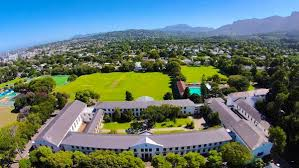
    Established in 1829, the South African College Schools, commonly known as SACS, claim the title of the oldest school in South Africa. SACS was initially founded in Cape Town as a part of the South African College, a higher education institution which later split into the University of Cape Town and SACS. The school’s picturesque location on the slopes of Table Mountain has provided a backdrop to its prestigious history.

    With a rich curriculum covering a broad range of subjects, SACS has produced many notable alumni who have made significant contributions to various fields. The school prides itself on offering a holistic education that extends beyond academics, including cultural activities and sports programs. Its commitment to nurturing well-rounded individuals remains central to its educational philosophy.

    2. Rhenish Girls’ High School

    Rhenish Girls’ High School, founded in 1860 in Stellenbosch, is the oldest girls’ school in South Africa. Set in the heart of the Cape wine region, Rhenish has a legacy of providing quality education to young women, preparing them for a world that was historically dominated by men. The school was originally established by members of the Rhenish Missionary Society to educate the daughters of missionaries and local community leaders.

    Today, Rhenish Girls’ High School continues to be a beacon of academic excellence and empowerment for girls. It maintains a strong emphasis on science and mathematics, reflecting its mission to encourage female participation in traditionally male-dominated sectors. The school’s environment is designed to foster independence, critical thinking, and leadership among its students.

    3. St. Andrew’s College, Grahamstown

    St. Andrew’s College in Grahamstown, now Makhanda, was founded in 1855 and has a history deeply intertwined with the Eastern Cape. As an Anglican school, it has a tradition of providing a faith-based education that emphasizes character building and community service. The college has enjoyed a long-standing reputation for excellence in education, particularly in its academic and sporting achievements.

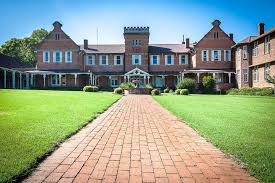
    The picturesque campus of St. Andrew’s College bears witness to its historic past with well-preserved Victorian architecture. Students from diverse backgrounds attend the school, benefitting from its rigorous academic program and extensive extracurricular offerings. St. Andrew’s is renowned for cultivating a strong sense of camaraderie and school spirit among its pupils.

    4. Diocesan College (Bishops)

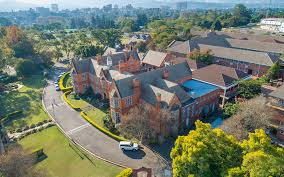
    Another of the Cape’s education cornerstones is the Diocesan College, better known as Bishops, located in Rondebosch, Cape Town. Established in 1849, it was founded by Bishop Robert Gray and has grown from its Episcopal roots into a prestigious institution known for providing a world-class education. Its mission has always been to blend academic rigor with moral development.

    Bishops has developed a reputation for academic and sporting excellence, with modern facilities and a diverse range of extracurricular activities. The college’s alumni include prominent figures in a variety of sectors across South African society and beyond. The school’s tradition of producing well-rounded citizens is a testament to its comprehensive education system.

    5. Grey College, Bloemfontein

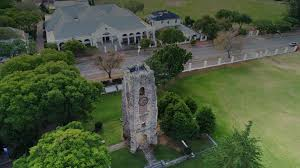
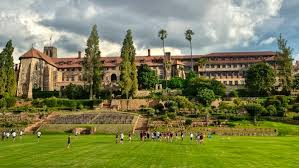
    Grey College in Bloemfontein, established in 1855, is not only one of the oldest schools in South Africa but also one of the most prestigious boys’ schools in the country. Its founders envisioned it as an institution that would foster the intellectual and moral development of young boys in the Orange Free State. Over the years, it has maintained a strong academic track record and is recognized for its competitive sports programs.

    The campus of Grey College, with its classic architecture and expansive grounds, reflects the institution’s storied past. Its contributions to South African society are visible in the achievements of its alumni, many of whom have become leaders in various industries. The school’s ethos of excellence and leadership continues to guide its educational approach.

    6. Maritzburg College

    Maritzburg College, located in Pietermaritzburg, was founded in 1863 and has established a formidable reputation in KwaZulu-Natal. It started as a small government school and has blossomed into one of the leading boys’ schools in South Africa. The school’s motto, “Proudly Maritzburg College,” encapsulates its spirit of pride in both tradition and accomplishment.

    The institution’s history is filled with instances of resilience and adaptation to changing educational demands. Its impressive array of facilities supports a wide assortment of academic subjects and extracurricular offerings. Maritzburg College is celebrated for maintaining high academic standards and for its enduring emphasis on character formation.

    7. St. Mary’s School for Girls

    Nestled in the bustling city of Johannesburg, St. Mary’s School for Girls has the honor of being one of the oldest schools in the city and one of the first to be established for girls, with its origins dating back to 1888. The school’s founding principles were to provide an inclusive education during a period when the opportunities for girls were severely limited. St. Mary’s has a rich history of embracing change while maintaining its commitment to excellent education for young women.

    Beyond its strong academic program, St. Mary’s School is noted for its cultural programs, including music and the arts. It maintains a nurturing environment that focuses on the development of leadership skills and social responsibility. The school continues to evolve, ensuring that its students are prepared for the challenges of the 21st century.

    8. St. John’s College

    St. John’s College in Johannesburg has been a landmark in the landscape of South African education since its foundation in 1898. Its inception was in response to the need for an Anglican school for boys in the rapidly growing gold mining town. Since then, it has expanded its reach, offering an education that balances time-honored values with modern-day scholastic requirements.

    St. John’s College boasts impressive grounds and facilities, providing a picturesque setting for intellectual and personal growth. Its curriculum spans a wide range of subjects, catering to a diverse student body. The school’s legacy includes a commitment to nurturing the leaders of tomorrow, with a strong foundation in ethics and social justice.

    9. Pretoria Boys High School

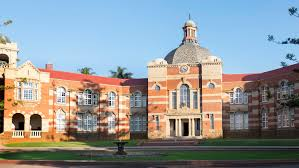
    Founded in 1901, Pretoria Boys High School is steeped in the history of South Africa’s capital city. The school was established following the destabilizing events of the Anglo-Boer War, with the goal of providing a stable and robust educational setting for boys. Its significant heritage is matched by a present-day ethos that promotes both academic distinction and the cultivation of personal character.

    Pretoria Boys High School has grown to become one of the country’s foremost boys’ schools, hosting a vibrant, multicultural student population. The beautiful campus, characterized by majestic buildings and lush gardens, offers a conducive environment for learning and development. The school’s alumni have made substantial contributions to South African society, evidence of its enduring legacy of excellence.

    Conclusion

    These nine venerable institutions represent more than just long-standing educational facilities; they are custodians of culture, history, and academic excellence in South Africa. The oldest schools in the country carry a deep sense of responsibility in shaping the leaders and citizens of tomorrow, drawing from a well of traditions and experiences that have stood the test of time. While honoring their rich past, these schools continue to adapt to the educational needs of contemporary society, offering a unique blend of heritage and progress that is vital to the cultural fabric of South Africa.

    The future is bright for the students who walk through the corridors of these enduring academic havens, grounded in history and equipped for the innovations of the future.

  • Oldest Paintings in the World

    The history of art is as old as humanity itself, and the earliest paintings offer a window into the minds of our ancient ancestors. These artworks, created with materials available at the time such as ochre, charcoal, and other natural pigments, have survived thousands of years. Often found in caves or on rocky overhangs, these paintings provide clues about the cultural practices, religious beliefs, and daily lives of prehistoric peoples.

    This article explores seven of the oldest paintings in the world, each a masterpiece that has withstood the test of time to tell a story from our distant past. These fascinating works of art are not only important archaeological finds but also irreplaceable treasures of the human story.

    Oldest Paintings in the World

    1. El Castillo Cave Paintings

    The El Castillo Cave, located in Cantabria, Spain, holds one of the oldest known paintings in the world. Dating back to at least 40,800 years ago, these paintings include hand stencils and disks made by blowing or spitting paint onto the wall. Researchers used Uranium-Thorium dating techniques, which measure the decay of uranium into thorium, to determine their age with surprising accuracy. The deep red, hand-stencil outlines are a stark reminder of the human presence at this time, predating the arrival of modern Homo sapiens in Europe.

    The images suggest the possibility that Neanderthals may have been the first artists, challenging the long-held belief that only modern Homo sapiens created symbolic art. The geometric patterns and shapes in El Castillo are simple yet enigmatic, raising intriguing questions about their purpose. Were these symbols of communication, an early form of language, or something more ceremonial? The El Castillo Cave Paintings are not only a testament to the rise of human creativity but also provide invaluable insights into cognitive development and social structures of prehistoric communities.

    2. Chauvet Cave Paintings

    Nestled in the Ardèche valley of southern France, the Chauvet Cave houses some of the most well-preserved and complex Paleolithic artistry ever discovered. Thought to be about 32,000 years old, these paintings depict a variety of animals, including horses, rhinoceroses, lions, and bison. The detail and movement captured in the drawings suggest a sophisticated level of skill and artistic intention.

    The use of shading and perspective showcases a level of artistic understanding that was previously thought to be an invention of later historical periods. This advanced approach to drawing suggests that early humans had a complex appreciation of their environment and the creatures within it. The artists used the natural contours of the cave walls to add a three-dimensional effect to their work, creating scenes with a dramatic and lifelike presence that still resonates with modern viewers.

    The Chauvet Cave Paintings are under strict protection due to their fragile nature, preventing damage from exposure to light and changes in temperature and humidity. The discovery of these paintings reshaped our understanding of early human culture, emphasizing the sophistication and depth of prehistoric art.

    3. Sulawesi Cave Paintings

    Indonesia’s island of Sulawesi features some of the oldest known cave paintings in the world, with the earliest dated around 43,900 years ago. Among these ancient artworks is a stunning depiction of a hunting scene, which includes what may be the earliest example of figurative art. This scene portrays part-human, part-animal figures, known as therianthropes, appearing to hunt wild pigs and small buffaloes.

    The presence of therianthropes in the Sulawesi Cave Paintings indicates the capacity for abstract thought and the human ability to imagine beings that do not exist in the natural world. This imaginative leap is crucial for understanding the origins of religion, mythology, and other forms of complex symbolic thinking. The artists who created these paintings used red and mulberry-colored pigments, which they applied with their fingers, brushes, or perhaps even airbrushing techniques by blowing pigment over hands placed on the cave wall.

    The Sulawesi Cave Paintings not only push back the date of the earliest known narrative art but also highlight the artistic tradition that was not isolated to Europe. These images reveal that early humans across the globe were engaging in similar forms of expression, pointing to a more interconnected prehistoric world than previously believed.

    4. Apollo 11 Stones

    The Apollo 11 Stones, named after the famous space mission due to their discovery around the same time, are considered the oldest known artifacts of mobile art. Found in the Huns Mountains of Namibia, these stone slabs are believed to be around 25,500 to 30,000 years old. The stones feature engravings of animals such as rhinoceroses and zebras, etched with ocher.

    Separated into at least seven slabs, the stones suggest that early humans in this area carried artwork with them, implying a significant cultural value placed on these pieces. This could indicate the beginning of personal or tribal identity expressed through art, or they might have served as a means of storytelling or recording information. The abstract nature of some of the carvings on the Apollo 11 Stones also implies a capability for symbolic thought, a foundational aspect of human cognitive evolution.

    Each piece is meticulously crafted, showing that the artists took great care in their work and suggesting that the creation of art was an intentional and meaningful act. The level of detail in the carvings showcases the technical skill and the aesthetic sensibilities of the people of this time period, as they captured the essence of the animals they depicted with the simplest of lines and shapes.

    5. Tassili n’Ajjer Paintings

    In the heart of the Sahara desert in Algeria, the Tassili n’Ajjer National Park contains a vast array of rock art and ancient paintings that date back to 12,000 BCE. The area is a UNESCO World Heritage Site and is often referred to as the “Louvre of the desert” because of the sheer number and diversity of the artworks found there. The paintings and carvings tell the stories of the changing ecology and human lifestyles in this area over thousands of years.

    The Tassili n’Ajjer Paintings include images of cattle, giraffes, lions, and even crocodiles, indicating that the Sahara was once a much wetter place than it is today. Some of these depictions are naturalistic, while others are more stylized, reflecting a rich artistic tradition that evolved over time. The various styles and subjects represented in these paintings illustrate the shift from hunting and gathering to the domestication of animals and the development of agriculture.

    These paintings also include human figures, some of which are elaborately adorned, suggesting that clothing and perhaps rank or status were important features of these ancient societies. The careful preservation of these paintings, coupled with their location in an area that has become incredibly inhospitable, highlights the importance of artistic expression as a human universal, transcending time, geography, and climate.

    6. Bhimbetka Rock Shelters Paintings

    The Bhimbetka Rock Shelters, nestled within the Vindhyan Mountains of central India, boast a rich collection of prehistoric paintings that span a staggering period from about 30,000 years ago to medieval times. This extensive timeframe makes the site a valuable chronicle of human history through its art. The earliest cave paintings at Bhimbetka showcase scenes of everyday life, such as hunting, dancing, music, and rituals, along with various animals.

    The colors used in the Bhimbetka Rock Shelter paintings were derived from naturally found materials; red from hematite, green from copper minerals, and white from limestone. Over the millennia, these paintings have withstood the ravages of time, due to the rock overhangs that have provided protection from the elements. This remarkable endurance has allowed visitors today to glimpse a wide spectrum of historical transitions and developments in human culture.

    The diversity in the depictions speaks to the complex societies that created them, and many of the Bhimbetka paintings include intricately drawn figures that provide insights into the clothing, ornaments, and possibly even the social structures of the times. It is clear that art has been a mode of storytelling and expression for humans across the ages, and Bhimbetka stands as an enduring testament to this aspect of our nature.

    7. Cueva de las Manos

    Cueva de las Manos, which simply means “Cave of the Hands,” is situated in the remote Patagonia region of Argentina and dates back to between 13,000 to 9,500 years ago. This cave is most famous for its negative handprints, sprayed around the contours of the human hand with pigments made from iron oxide or hematite, which has given them a vibrant red color. The hands appear to belong predominantly to adolescents, reflecting a possible rite of passage or coming-of-age ritual.

    In addition to the handprints, Cueva de las Manos features paintings of hunters and guanacos, a relative of the llama that would have been an essential resource for the survival of the people at the time. The artwork also suggests some of the earliest known uses of stenciling, a technique that would become a fundamental practice in artistic expression globally. The commitment to creating these handprints, requiring preparation of materials and the endurance of a potentially sacred process, implies that art held significant meaning and function for these early inhabitants of Patagonia.

    The cultural traditions represented at Cueva de las Manos remind us of the universal human need to express individual and collective identity through art. These images are not isolated expressions but rather part of a tapestry that encompasses the shared human experience, connecting us across continents and through time.

    Conclusion

    The exploration of the world’s oldest paintings reveals the profound depth and diversity of human creativity throughout our history. Each of the seven sites discussed provides a unique perspective on the development of art, emphasizing the importance of artistic expression as a core aspect of the human condition. These paintings are not mere decorations but are integral to understanding our ancestry and the ways in which our predecessors interpreted the world around them.

    From the earliest handprints left as a signature of existence to the elaborate depictions of animals, hunting scenes, and mythical creatures, these artworks demonstrate the inherent inclination of humans to articulate their experiences and beliefs. Today, they remind us of the interconnectedness of human cultures and the timeless desire to leave a mark on the world. The preservation and continued study of these ancient masterpieces are crucial as they are the lasting legacies of our distant past, offering invaluable insights into the long and diverse narrative of human civilization.

  • Oldest Poems in the World

    The art of poetry traverses the sprawling landscapes of human civilization, bearing witness to our most profound emotions, existential inquiries, and the universal human experience. From the cradle of civilization to the modern digital age, poetry has evolved in form, function, and language, yet its essence remains the same: to evoke, to express, to enlighten.

    This journey into the past invites us to explore the roots of poetic expression, to uncover the oldest poems known to humanity. Each of these ancient masterpieces offers a unique glimpse not only into the literary traditions from which they emerge but also into the socio-cultural, political, and personal realms of their creators.

    Our expedition into antiquity will navigate through time and space, from Mesopotamia’s fertile crescent to the rugged landscapes of Scandinavia, unearthing seven of the world’s oldest poems. These poetic relics, engraved in stone, etched into clay, or meticulously inked on papyrus, have traversed millennia to reach us, resonating with the echoes of a world long vanished yet strikingly familiar in their portrayal of human nature.

    List of the Oldest Poems in the World

    1. The Epic of Gilgamesh

    Regarded as the earliest surviving great work of literature, The Epic of Gilgamesh dates back to the Third Dynasty of Ur (circa 2100 BCE). This epic poem from ancient Mesopotamia, written in cuneiform on clay tablets, narrates the exploits of Gilgamesh, the historical king of Uruk. Beyond its monumental adventures, the narrative delves deep into themes of friendship, the quest for fame, and the universal search for immortality. Its most poignant moments examine the human condition, notably through Gilgamesh’s grief at the loss of his friend Enkidu and his subsequent ponderings on mortality.

    This masterpiece not only offers a window into the societal values and beliefs of ancient Mesopotamia but also presents timeless insights into the human psyche. The endurance of its themes across millennia attests to its profound impact on the literary and philosophical consciousness of humanity.

    2. The Pyramid Texts

    The Pyramid Texts are a collection of ancient Egyptian religious texts from the time of the Old Kingdom (circa 2400–2300 BCE). Written in Old Egyptian, they are the oldest known religious texts in the world. Carved on the walls of the pyramids at Saqqara, these inscriptions were intended to protect the pharaoh’s remains and assist him in his journey through the afterlife. The texts encompass a diverse range of genres, including hymns to the gods, prayers, magical spells, and admonitions, demonstrating the Egyptians’ complex beliefs about death and the afterlife.

    Through these texts, we gain insight into ancient Egyptian theology, their understanding of cosmology, and the pharaoh’s role as an intermediary between the gods and the people. The Pyramid Texts, thus, do not only serve as religious and poetic documents but also as a foundational stone in the edifice of human cultural and spiritual heritage.

    3. The Rigveda

    The Rigveda, composed in ancient India around 1500 BCE, is not only the oldest of the Vedas but is also among the earliest surviving literary works in any Indo-European language. This collection of Sanskrit hymns is central to the spiritual and philosophical traditions of Hinduism, containing over 1,000 hymns dedicated to various deities. The Rigveda’s poetry is marked by its lyrical beauty, metaphysical depth, and a profound sense of cosmology and ritual importance. These hymns not only sought to invoke the deities but also to encapsulate the essence of the cosmic order and the samsara—the cycle of life, death, and rebirth.

    The poets (rishis) of the Rigveda displayed a remarkable command of language, metaphor, and philosophical insight, offering a poetic and spiritual vision that remains influential in Indian culture and beyond. Its preservation and continued reverence is a testament to the enduring power of the spoken word and its capacity to convey the deepest yearnings of the human spirit.

    4. The Epic of Atrahasis

    The Epic of Atrahasis, dating back to the 18th century BCE in ancient Mesopotamia, is a crucial source for our understanding of Mesopotamian mythology and religion. This Akkadian poem recounts the story of Atrahasis, a sage who is saved from a catastrophic flood by the god Enki. This narrative shares thematic similarities with other flood myths, including the biblical story of Noah.

    The poem explores themes such as divine justice, human mortality, and the relationship between the gods and humanity. Its inclusion of a flood narrative, a motif found in numerous cultures around the world, points to a shared human experience or cultural exchange among ancient civilizations. The Epic of Atrahasis not only offers insights into the Mesopotamian worldview but also contributes to a broader understanding of ancient literary traditions and their intersections.

    5. The Homeric Hymns

    The Homeric Hymns, attributed to Homer but likely composed by various authors over time, are a collection of 33 ancient Greek hymns celebrating individual gods. Dating from the 7th to the 4th centuries BCE, these hymns are among the earliest examples of Greek lyric poetry. The Homeric Hymns are invaluable for their detailed portrayal of Greek mythology, religion, and an anthropomorphic pantheon, where gods have human-like traits and emotions. Through vivid narratives and appeals, the hymns offer insights into ancient Greek values, worldview, and the centrality of religion in daily life. Their influence extends beyond the literary, shaping the development of Greek religious thought and practices.

    The lyrical elegance, coupled with their historical and religious significance, makes the Homeric Hymns a pivotal bridge between oral tradition and written literature in ancient Greece.

    6. The Book of the Dead

    The Book of the Dead is a collection of funerary texts from ancient Egypt, dating from approximately 1550 BCE to 50 BCE. These texts were intended to guide the deceased through the underworld and into the afterlife, ensuring their safe passage and acceptance by Osiris, the god of the afterlife. Written in hieroglyphics, the texts include spells, prayers, and incantations to be used by the dead. They reflect the Egyptians’ complex beliefs about death, rebirth, and the afterlife.

    The papyri on which these texts were written were often buried with the mummified remains of the deceased, serving as a manual for the afterlife. The Book of the Dead illustrates the ancient Egyptians’ quest for eternal life and their belief in the power of the written word to transcend mortal boundaries.

    7. The Poetic Edda

    The Poetic Edda is a collection of Old Norse poems from the Icelandic medieval manuscript Codex Regius, written in the 13th century but containing poems that are much older, some possibly dating as far back as the 8th century. These poems are a primary source for understanding Norse mythology and the Viking age. The Poetic Edda includes narratives of gods, heroes, and the fate of the world, embodying themes of fate, heroism, and the inexorable decline of the gods. Its mythological and heroic poems delve into the Norse cosmology, the ties between gods and mortals, and the inevitable Ragnarök—the twilight of the gods.

    The vivid depictions of battles, love affairs, and quests for power within these poems have profoundly influenced both the literary and cultural heritage of Scandinavia. The legacy of the Poetic Edda extends far beyond its historical context, inspiring countless works of literature, art, and music throughout the centuries.

    Conclusion

    The exploration of the world’s oldest poems reveals not only the dawn of literary expression but also the universality of human experience across time and culture. These ancient verses, spanning continents and millennia, echo the same themes that move us today: love and loss, duty and defiance, the divine and the mortal. They invite us to reflect on our shared humanity, on the enduring quest for meaning and transcendence in the face of fleeting existence.

    As we journey through these seminal works, we are reminded that poetry, in all its forms, remains a powerful mirror to the human soul—an enduring testament to our collective endeavor to articulate the inarticulable, to commune with the eternal through the ephemeral whispers of the past.

  • Oldest Novels in the World: An Exploration

    In the expanse of literary history, novels have held a significant place, drawing readers into realms of imagination, offering escapes into the intricacies of diverse cultures, and presenting the complexities of human emotions and societal issues. As we delve into the origins of the novel, a fascinating journey unfolds, tracing back to ancient civilizations where storytelling was not merely entertainment but also a means to preserve traditions, moral lessons, and historical events.

    This article explores eight of the oldest novels in the world, each a gem in its own right, reflecting the era’s technological, philosophical, and cultural advancements. These works, penned by authors whose visions transcended the limitations of their times, provide invaluable insights into the human condition, societal norms, and the universal quest for understanding and expression.

    Oldest Novels in the World

    1. “The Tale of Genji” by Murasaki Shikibu

    Written in the early 11th century by Murasaki Shikibu, a noblewoman and lady-in-waiting at the Heian court, “The Tale of Genji” is often celebrated as the world’s first novel. This monumental work not only showcases the sophisticated court culture of Japan but also provides an intricate portrayal of the emotional lives and social maneuvers of its characters. The narrative follows the life and loves of Genji, an imperial officer, through a series of interwoven tales that explore themes of love, loss, and the impermanence of beauty and power.

    The depth of character development and psychological complexity found within its pages marks a significant departure from the more simplistic plots of previous literary works. Murasaki’s insightful observations into the human psyche, combined with her skillful storytelling, have earned “The Tale of Genji” its prestigious status. It is a testament to the enduring nature of human emotions and the artistry of narrative fiction, offering a window into the cultural and philosophical underpinnings of 11th-century Japan.

    2. “The Golden Ass” by Apuleius

    “The Golden Ass,” written in the 2nd century AD by Apuleius, stands as the only Latin novel to survive in its entirety. This picaresque tale narrates the adventures of Lucius, a young man enchanted into donkey form, and his quest to return to human shape, exploring themes of curiosity, transformation, and redemption. Apuleius’s novel is rich in satirical humor and vibrant character sketches, painting a vivid picture of Roman society and its multitude of deities and demigods.

    The novel is not only significant for its entertaining narrative but also for its intricate structure and the depth of its philosophical and religious reflections. It provides a unique glimpse into the spiritual and social life of the Roman Empire, bridging the gap between myth and the human condition. “The Golden Ass” thus serves as an invaluable artifact of ancient literature, offering insights into the complexities of Roman culture and the timeless nature of human folly and resilience.

    3. “Romance of the Three Kingdoms” by Luo Guanzhong

    Authored by Luo Guanzhong in the 14th century, “Romance of the Three Kingdoms” is revered as one of China’s Four Great Classical Novels. This epic narrative recounts the tumultuous end of the Han Dynasty and the ensuing period of rivalry and warfare among the Wei, Shu, and Wu kingdoms. With its rich tapestry of characters, intricate plotlines, and a blend of historical events and legendary tales, the novel has significantly influenced Chinese culture and literature.

    The novel’s portrayal of loyalty, strategy, and political intrigue, along with its philosophical depth, makes it a cornerstone in the study of human nature and power dynamics. Through its pages, readers gain an understanding of Confucian values, the art of war, and the importance of strategic alliances. “Romance of the Three Kingdoms” remains a powerful testament to the enduring nature of storytelling and its capacity to capture the complexity of human aspirations and the inexorable march of history.

    4. “Shahnameh” by Ferdowsi

    Composed by the Persian poet Ferdowsi over three decades and completed in the early 11th century, “Shahnameh,” or “The Book of Kings,” is a monumental epic poem that stands as one of the most significant works of Persian literature. This grand narrative recounts the mythical and historical past of the Persian Empire, from the creation of the world to the Arab conquest of Persia in the 7th century. Through its stories of heroes, kings, and villains, “Shahnameh” encapsulates the essence of Persian culture and the moral and philosophical reflections of its time.

    Ferdowsi’s masterpiece not only preserves the history and cultural heritage of Iran but also explores universal themes of heroism, justice, and love.

    The intricate narrative structure and the poetic brilliance of “Shahnameh” have immortalized it as a pinnacle of literary achievement, offering readers not just a historical account but a profound exploration of the human condition. It serves as a bridge between Iran’s pre-Islamic and Islamic eras, highlighting the power of literature to transcend time and cultural boundaries.

    5. “The Epic of Gilgamesh”

    Originating from ancient Mesopotamia around the 18th century BC, “The Epic of Gilgamesh” is one of the earliest works of literature known to man. This epic poem follows Gilgamesh, a tyrannical king of Uruk, and his journey towards understanding mortality, friendship, and the meaning of life. His adventures with Enkidu, the wild man created by the gods to distract Gilgamesh from his oppressive rule, and their quest for eternal life, offer profound insights into human fears and desires.

    The narrative’s exploration of themes such as friendship, the fear of death, and the pursuit of immortality resonate with audiences even today. “The Epic of Gilgamesh” not only provides a window into ancient Sumerian culture and beliefs but also reflects the universal quest for meaning in life. It stands as a testament to the enduring power of storytelling and its ability to connect deeply with the human experience.

    6. “The Mahābhārata” by Vyasa

    “The Mahābhārata,” attributed to the sage Vyasa, is a monumental epic from ancient India, written in Sanskrit. Comprising over 100,000 shlokas (verse lines), it is one of the largest epic tales ever told, narrating the story of the Kurukshetra War and the fates of the Kaurava and the Pandava princes. Beyond its grand scale, the Mahābhārata delves into philosophical and moral discussions, making it a profound study of ethics, duty, and dharma.

    The epic integrates various Hindu philosophical concepts, including sections like the Bhagavad Gita, which is a sacred text of Hinduism. The depth and complexity of its characters, along with the ethical and spiritual questions it raises, render “The Mahābhārata” not just a story of war but a reflection on humanity, righteousness, and the complexities of life’s decisions. It serves as a cultural and moral compass for millions, continuing to influence Indian thought, literature, and art throughout the centuries.

    7. “The Iliad” by Homer

    “The Iliad,” attributed to the ancient Greek poet Homer, is a defining epic of Western literature, composed in the 8th century BC. This timeless narrative centers on a few weeks during the final year of the decade-long Trojan War, focusing on the anger of Achilles, its impact on the Achaeans’ battle fortunes, and the eventual fall of Troy. Through its vivid portrayal of heroic battles, divine machinations, and human frailties, “The Iliad” explores themes of glory, wrath, and redemption.

    Beyond its historical and legendary tales, “The Iliad” offers a deep philosophical commentary on the nature of heroism, the human condition, and the inevitability of death. Its influence extends beyond literature into the realms of philosophy, psychology, and warfare, underscoring the complexities of honor, mortality, and fate. “The Iliad” remains a cornerstone of literary study, echoing the universal struggles of man in the face of divine will and the chaos of existence.

    8. “Aethiopica” by Heliodorus

    “Aethiopica,” written by Heliodorus of Emesa in the 3rd century AD, is a Greek romance that has influenced the development of the novel as a form of literary expression. This narrative follows the adventures of Theagenes and Chariclea, two lovers who endure numerous trials and tribulations across the Mediterranean and into Ethiopia. Through its sophisticated plot structure and use of retrospective narration, “Aethiopica” showcases the intricacies of storytelling and character development.

    Heliodorus’s work is notable for its portrayal of moral and philosophical ideals through the trials of its protagonists, combining elements of adventure, romance, and ethical dilemmas. “Aethiopica” has been praised for its intricate narrative and has served as a model for later novelists, demonstrating the enduring appeal of complex storytelling and the exploration of human virtues and vices. It is a masterpiece of ancient Greek literature, reflecting the universal quest for love, understanding, and moral integrity.

    Conclusion

    From the dawn of civilization, storytelling has served as a cornerstone of human culture, exploring the complexities of existence, morality, and the human heart. The novels and epics discussed here represent only a fraction of humanity’s literary output but are foundational to understanding the evolution of narrative and the perennial themes that continue to resonate with us. These works, spanning continents and millennia, underscore the unifying experience of humanity, our struggles, triumphs, hopes, and fears. As we delve into these ancient texts, we are reminded of the enduring power of literature to bridge time and space, offering us timeless wisdom and a deeper connection to the past. The oldest novels in the world are not just artifacts of their time but living documents that continue to inspire, challenge, and entertain.

  • Oldest Radio Hosts in the World

    Radio, one of the oldest forms of modern communication, has been the cornerstone of entertainment and information for over a century. Within the realm of broadcasting, we find a unique set of individuals who, through the years, have continued to captivate audiences with their voices alone. These venerable articulators possess the power to weave stories, report news, and engage listeners, regardless of their age.

    This article celebrates the longevity and perseverance of the oldest radio hosts in the world, individuals who have not only witnessed the evolution of the medium but have also become synonymous with the experience of tuning in.

    Oldest Radio Hosts in the World

    1. Marjorie Margolies – United States

    At 74, Marjorie Margolies is a testament to longevity in broadcasting. Marjorie began her career in journalism in the 1960s and has donned multiple hats as a reporter, correspondent, and radio host over her illustrious career. Her voice became a staple on airwaves, delivering news and interviews with a steadfastness that earned her the respect of listeners and peers alike.

    Despite the challenges faced by women in the field at the time, Marjorie rose to prominence and broke barriers, setting a standard for future broadcasters. Even with the dawn of digital media, she has adapted and proved that traditional radio holds a revered and irreplaceable place in the spectrum of media. She continues to host shows, engage with her audience, and enrich the broadcasting landscape with her years of wisdom and experience.

    2. Tony Blackburn – United Kingdom

    Tony Blackburn set the benchmark for British radio hosts with his unmatched persistence and charm. At 79, Blackburn’s career spans over five decades, beginning with the pirate radio movement in the 1960s. He was among the first disc jockeys on the BBC’s newly-conceived Radio 1 and has since been a fixture in the UK’s radio scene.

    Blackburn’s smooth voice and charismatic personality have made him a household name, and his influence on radio is profound. He has navigated through changes in taste and technology, always remaining relevant and beloved by the audience.

    Tony is celebrated not only for his age but also for the contributions he has made to radio broadcasting throughout its golden and contemporary periods.

    3. Garrison Keillor – United States

    Garrison Keillor is a name synonymous with American public radio, particularly noted for his program “A Prairie Home Companion.” At 80, Keillor’s distinctive voice has been a comforting presence in homes every Saturday evening for several decades. Keillor’s radio career is distinguished by his ability to combine storytelling, music, and humor in a live variety show format, setting the bar for live radio entertainment.

    His work has encapsulated the essence of Midwestern culture and has earned him critical acclaim and a dedicated fan base.

    Despite retiring from “A Prairie Home Companion” in 2016, Keillor has remained active in the broadcasting sphere, demonstrating that his passion for radio knows no bounds. He continues to write and perform, showcasing the enduring nature of radio as a medium for storytelling.

    4. Bob Uecker – United States

    The name Bob Uecker is etched into sports broadcasting history as one of the finest radio voices in baseball lore. At 88, Uecker, often referred to as “Mr. Baseball,” has spent over half a century regaling listeners with his colorful commentary and in-depth knowledge of the game. His career, mostly associated with the Milwaukee Brewers, has not just been sustained by his love for baseball but also by his quick wit and infectious humor.

    Uecker has witnessed and narrated some of the most iconic moments in the sport, drawing listeners into the excitement from the comfort of their own homes.

    His dedication to the sport and to broadcasting is evidenced by the decades he has spent behind the microphone, a dedication that has earned him a revered spot in the National Radio Hall of Fame. Uecker’s voice continues to be an integral part of the baseball experience for countless fans around the world.

    5. Bruce Morrow – United States

    Also known as “Cousin Brucie,” Bruce Morrow is a legend in the sphere of rock and roll radio broadcasting. At 87, his enthusiasm for the genre shines through every broadcast, making him an iconic figure in the history of American radio. Morrow began his career in the late 1950s and became famous for introducing rock and roll to the masses through his shows. His persona and the connection he creates with his audience has been pivotal in making “Cousin Brucie” a beloved radio host.

    Despite changes in the industry and the rise of digital media, Morrow has demonstrated remarkable adaptability, bringing the golden era of music to today’s generation with energy that rivals his younger counterparts. His ongoing presence in the industry stands as a tribute to the timeless appeal of rock and roll and the power of connective broadcasting.

    6. Red Symons – Australia

    Red Symons is a true stalwart of the Australian radio industry. At 73, Symons boasts a career that shines with variety and accomplishment as a musician, comedian, television star, and of course, a radio broadcaster. He is perhaps most loved for his stint as a morning presenter on Melbourne’s ABC Radio, where he entertained listeners with his unique brand of wit and satire.

    Symons brought a refreshing level of honesty and directness to his interviews and segments, often challenging norms and expectations. His tenure on the radio has been marked by insightful observations and a refusal to shy away from tough topics, making him a distinctive voice in Australian media. His enduring influence is a testament to the character he has brought to the airwaves and the lasting impact of engaging, thought-provoking broadcasting.

    7. Paul Harvey – United States

    Though no longer with us, Paul Harvey remains an icon in the annals of radio history. Having passed away at the age of 90 in 2009, Harvey’s career in radio broadcasting stretched across an astonishing seven decades. He was renowned for his compelling storytelling and distinctive vocal cadence which resonated with millions of listeners. His program “The Rest of the Story” became a trademark in broadcasting innovation, where he narrated untold tales of famous individuals and historical events with a twist at the end.

    Harvey’s influence is far-reaching and has left an indelible mark on the fabric of American media. His memory lives on, as does the legacy of his work, illustrating the impact that one voice can have on generations of listeners.

    FAQs

    What defines the ‘oldest’ radio host?

    The term ‘oldest’ in the context of radio hosts refers not only to the age of the individuals but also their years of experience in broadcasting. This means that the figures highlighted might not necessarily be the oldest by age alone but are recognized for their longstanding careers and ongoing contributions to the world of radio.

    How has radio hosting changed over the years?

    Radio hosting has evolved from simply spinning records and reading news to a more interactive form involving listener participation, varied programming, and multifaceted roles that combine entertainment, news, and personal anecdotes. Technology has played a significant part, with the transition from analog to digital platforms and the growth of podcasting, expanding the reach and methods of radio broadcasting.

    Are there any radio hosts older than those listed?

    There may well be other radio hosts who are older or have longer careers; however, those listed in the article have been recognized for their significant contributions and fame within the industry. It’s important to note that information can change with time and new figures may emerge.

    How do radio hosts maintain relevance in the digital age?

    Radio hosts have adapted by integrating social media, podcasts, and online streaming into their repertoire. They engage with audiences in real time across multiple platforms and often offer on-demand content to reach listeners at their convenience. Many hosts also remain culturally and technologically savvy, discussing current trends and using contemporary references to maintain a strong connection with younger audiences.

    Conclusion

    The alluring charm of radio has persisted through the ages, thanks in large part to the talents and dedication of its hosts. The voices that have been listed here represent the pinnacle of this enduring medium, having adapted and thrived through the dynamic landscape of changing times. Their continued resonance with audiences stands as a testament to the timeless appeal of the spoken word and the power of human connection that radio upholds.

    These hosts have not just witnessed history — they have been the ones to narrate it, record it, and, in many ways, make it. As long as there are stories to be told and ears to listen, there will be a place for such esteemed voices in the world of broadcasting.

  • Oldest Journalists in the World

    In an era dominated by digital media, the value of experience and wisdom in journalism cannot be overstated. Journalism, at its heart, is about storytelling, investigating, and unwrapping the truth. Age, in this profession, often brings a depth of understanding and a breadth of perspective that is hard to match.

    Throughout the world, there are journalists who have not only witnessed history but have also had a hand in shaping the public’s understanding of it. This article celebrates the oldest journalists in the world, showcasing their enduring contribution to the field and the insights they continue to offer.

    Oldest Journalists in The World

    1. Helen Thomas

    Helen Thomas was an American reporter, author, and the first female officer of the National Press Club. Known as the “First Lady of the Press,” Helen’s career spanned over five decades, during which she covered the administrations of ten U.S. presidents, from John F. Kennedy to Barack Obama. She was renowned for her tenacious questioning and was a trailblazer for women in journalism.

    Despite facing sexism and ageism, Helen Thomas remained active in journalism until she retired at the age of 89. Her legacy is a testament to the power of resilience and commitment to truth.

    2. Carl Bernstein

    Carl Bernstein, alongside Bob Woodward, broke the Watergate scandal for The Washington Post, an investigative reporting feat that eventually led to the resignation of President Richard Nixon. Bernstein’s career began at the young age of 16 as a copyboy. Over the years, he has worked as a correspondent, bureau chief, and has authored or co-authored several books.

    Now in his late 70s, Bernstein remains active in journalism, contributing to various publications and news channels. His work exemplifies the enduring impact investigative journalism can have on society.

    3. Seymour Hersh

    Seymour Hersh is an investigative journalist known for exposing the My Lai Massacre and its cover-up during the Vietnam War, for which he received the Pulitzer Prize in 1970. Throughout his career, Hersh has tackled some of the most significant stories of misconduct and abuse of power within the American government and military.

    Even in his 80s, Hersh continues to contribute to journalism, writing for publications and working on in-depth projects. His dedication to uncovering the truth, regardless of the personal risk, has made him one of the most respected journalists of his generation.

    4. Dan Rather

    Dan Rather’s career in journalism spans over six decades, with much of it spent as anchor of CBS Evening News. Having reported from the front lines of wars, covered presidential elections, and interviewed world leaders, Rather has witnessed firsthand some of the most critical moments in recent history. He is known for his direct interviewing style and deep commitment to the principles of journalism.

    At the age of 89, Rather is still highly active, sharing his insights through various media and online platforms. His work is a reminder of the critical role journalists play in informing the public and holding the powerful accountable.

    5. Larry King

    Larry King was a broadcasting giant, having hosted over 50,000 interviews throughout his career with a wide range of guests, including every U.S. president from Gerald Ford to Barack Obama. Known for his suspenders and straightforward interviewing style, King’s questions often went straight to the heart of the matter, revealing his subject’s true character.

    Until his death at 87, King was actively involved in the media, continuing to interview and engage with public figures. His legacy includes not only his interviews but also his contribution to the evolution of talk show journalism.

    6. Sir David Attenborough

    While not a journalist in the traditional sense, Sir David Attenborough’s contributions to documentary filmmaking and broadcasting have deeply influenced public understanding of natural history and conservation. At the age of 95, Attenborough continues to write, produce, and narrate documentaries, reaching a global audience.

    His work highlights the importance of storytelling in journalism and the powerful impact it can have on public awareness and policy change, especially in the realm of environmental science.

    7. Gloria Steinem

    Gloria Steinem is best known as a feminist icon, but her contributions to journalism cannot be overlooked. Starting her career in the early 1960s, Steinem went undercover to expose the working conditions of Playboy Bunnies, highlighting her commitment to investigative journalism and social justice.

    In her 80s, Steinem continues to write and speak on issues affecting women, showcasing her unwavering dedication to advocacy and the power of the press in effecting social change.

    8. Bob Woodward

    Bob Woodward, Carl Bernstein’s colleague at The Washington Post during the Watergate investigation, has continued to impact journalism with his detailed and insightful reportage on American politics.

    Authoring or co-authoring more than a dozen bestsellers, Woodward has maintained an unparalleled standard of investigative journalism. At 77, he remains a significant figure in American journalism, his meticulous approach to uncovering the truth as vital as ever.

    9. Norman Lear

    At 99, Norman Lear might be best known as a television writer and producer, but his contributions to political commentary and journalism through his work cannot be understated. Shows like “All in the Family” not only entertained but also addressed societal issues, making Lear a pioneer in using television as a medium for social critique. Even today, Lear remains active, using his platform to encourage discussion on civic engagement and the importance of free press.

    10. Roy Reed

    Roy Reed was a seasoned reporter for The New York Times who notably covered the Civil Rights Movement, including the Selma to Montgomery marches. His reporting played a crucial role in informing the national perception of the movement and its importance.

    Reed continued to write and lecture on journalism and the Civil Rights Movement until his passing at the age of 87, leaving behind a legacy of truth-telling in the face of adversity.

    Frequently Asked Questions

    Who is considered the first female journalist?

    The title of the first female journalist can vary depending on criteria, but some consider Anne-Marguerite Petit du Noyer (1663–1719), a correspondent for French and Dutch newspapers, among the earliest known female reporters. Her extensive letters covered everything from European wars to royal affairs.

    How has journalism changed over the years?

    Journalism has evolved significantly from traditional print and broadcast mediums to include digital and social media platforms. The speed of news dissemination has dramatically increased, and the sources of information have multiplied. There’s also a greater emphasis on multimedia content, and the lines between different forms of journalism have blurred.

    What is the impact of age on journalism?

    Age brings depth, experience, and context to a journalist’s work. Older journalists often have a broader perspective on current events due to their historical knowledge, which can enrich their storytelling and analysis. However, they must remain adaptable to evolving technologies and methodologies to stay relevant in the digital age.

    Why is investigative journalism important?

    Investigative journalism is critical because it holds power to account, uncovers the truth behind hidden stories, and brings to light issues that may be overlooked or suppressed. It often requires a significant amount of time, resources, and courage, but its impact on society can be profound, leading to policy changes, reforms, and greater public awareness.

    What challenges do journalists face today?

    Journalists today face numerous challenges, including the spread of misinformation and fake news, pressures from political and corporate entities, the financial constraints of their organizations, and sometimes, threats to their personal safety. Additionally, the transition to digital platforms has forced journalists to learn new skills and adapt to changing audience preferences.

    Conclusion

    The oldest journalists in the world are a testament to the enduring nature of the craft. Their experiences span decades, covering some of the most significant events in recent history. They have adapted to the changing landscape of media, embraced new technologies, and continued to engage with audiences in meaningful ways. These journalists remind us of the power of storytelling, the importance of holding the powerful accountable, and the need for integrity in all journalistic endeavors. As the field of journalism continues to evolve, the lessons from these seasoned professionals are more relevant than ever, guiding a new generation of reporters in their quest to uncover the truth.